SEO Skills: The Hidden Advantage in E-commerce Success
Analysis of Steve Tan’s presentation reveals how SEO expertise provides a significant competitive edge in e-commerce. This examination covers practical implementation strategies and data-driven insights from Tan’s 18 years of experience building multiple eight-figure businesses. Current State of SEO
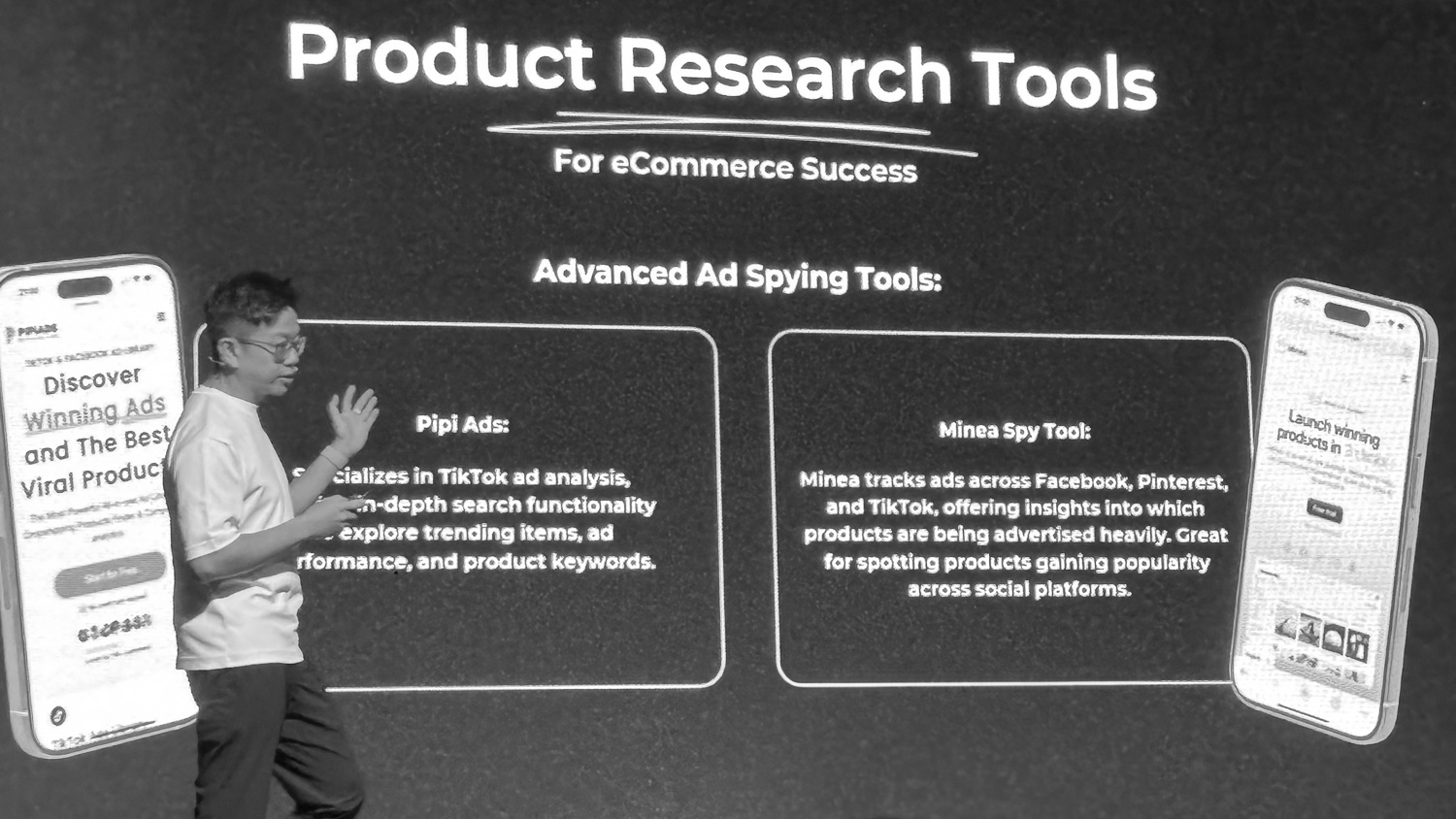
Analysis of Steve Tan’s presentation reveals how SEO expertise provides a significant competitive edge in e-commerce. This examination covers practical implementation strategies and data-driven insights from Tan’s 18 years of experience building multiple eight-figure businesses.
Current State of SEO and E-commerce Integration
SEO practitioners possess valuable skills that directly translate to e-commerce success, particularly in product research, market analysis, and traffic generation. Tan’s experience demonstrates how SEO capabilities can be leveraged across multiple business models, from dropshipping to white-label brands.
Key Statistics:
- $10 million revenue generated in 3 months from trend-based products
- 100-150K monthly revenue during seasonal peaks
- 30 million first-year revenue after pivoting to dropshipping
- 2.5 billion organic content views across social platforms
Technical Implementation Strategies
Product Research Framework
- Platform Analysis
- Aliexpress: Primary source for trending products
- Amazon: Competitive analysis and product validation
- TikTok: Trend identification and market validation
- Data Validation Process
- Cross-reference products across multiple platforms
- Analyze search volume using Ahrefs and SEMrush
- Review competitor performance metrics
- Examine customer feedback patterns
Traffic Generation Methods
- Organic Search Optimization
- Focus on high-intent keywords
- Product description optimization
- Multiple store strategy for SERP dominance
- Paid Media Integration
- Initial market testing
- Brand recognition building
- Cross-platform visibility
Business Model Analysis
Dropshipping Model
Advantages:
- Minimal initial investment
- No inventory management
- Rapid testing capability
- Multiple supplier flexibility
Limitations:
- Lower profit margins
- Less control over fulfillment
- Potential quality inconsistencies
White-Label Strategy
Advantages:
- Higher profit margins
- Brand control
- Quality consistency
Limitations:
- Higher initial investment
- Inventory management requirements
- Minimum order quantities
Industry Effects
The integration of SEO expertise with e-commerce has resulted in several market developments:
- Multi-Platform Presence
- Diversified traffic sources
- Cross-platform brand building
- Integrated marketing approaches
- Data-Driven Product Selection
- Search volume analysis
- Trend prediction
- Market gap identification
- Content Strategy Evolution
- Product-focused content creation
- Educational material development
- Brand story development
Implementation Requirements
Technical Prerequisites
- E-commerce platform knowledge (Shopify recommended)
- Analytics tools proficiency
- Product research tools access
Resource Requirements
- Initial testing budget ($500 minimum)
- Content creation capabilities
- Basic paid advertising knowledge
- Supplier relationship management
My Take: What This Means for Solo Publishers
The Steve Tan numbers are fun to cite, but let’s be real — $500K+ ad budgets and 30 million first-year revenue are not the solo publisher playbook. What IS directly applicable is the core thesis: SEO practitioners already have the hardest skills to build.
Keyword research is product research. Competition gap analysis is niche gap analysis. The technical discipline that makes someone good at ranking content is the same discipline that identifies winning products before the market saturates. The affiliate marketing industry crossed $17 billion in 2025 and is on track to hit $27.78 billion by 2027 — that’s not a trend you want to watch from the sidelines.
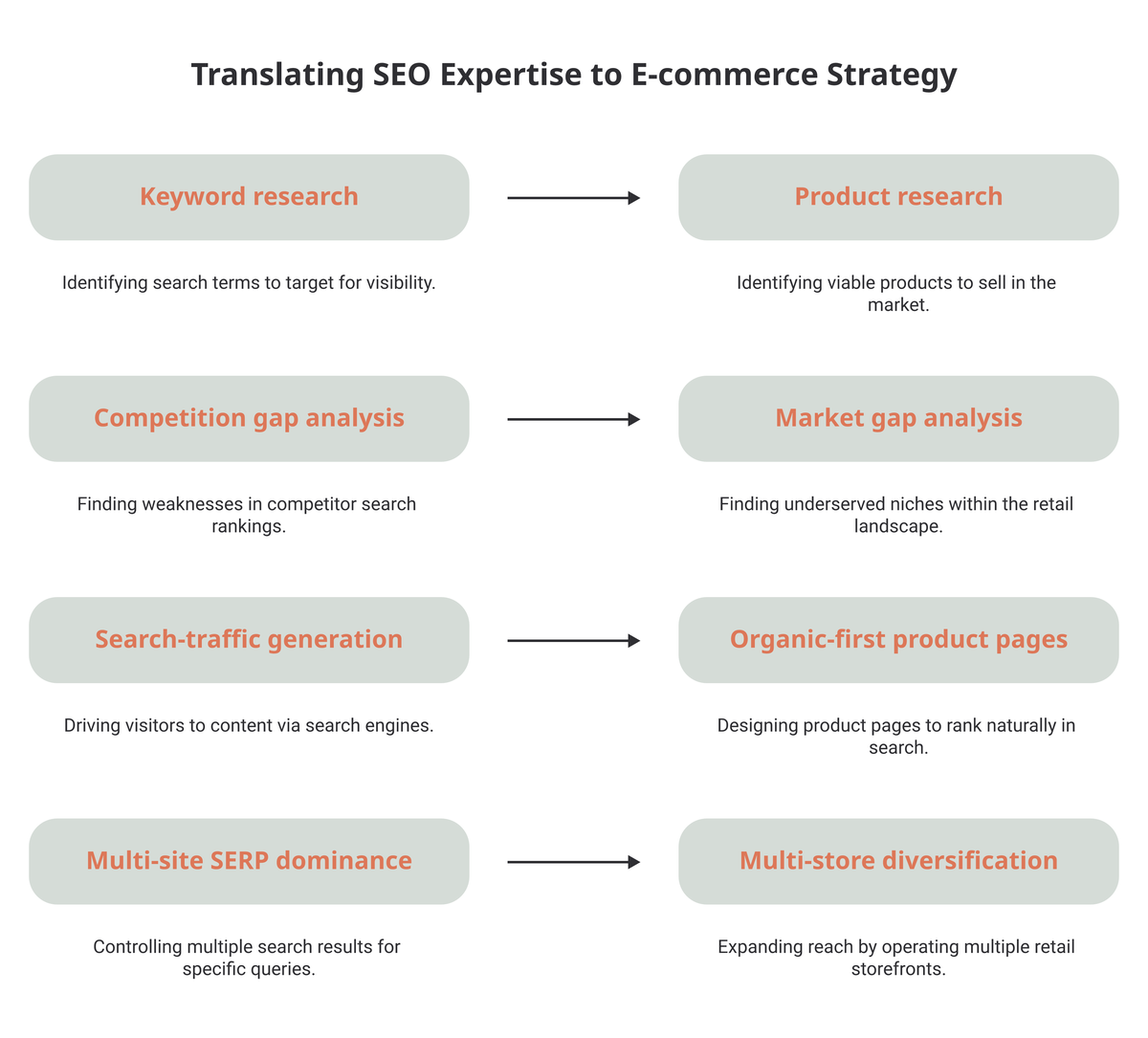
Where the SEO-to-e-commerce transfer actually works for solo operators:
- Product research using your existing keyword tools. Ahrefs and SEMrush aren’t just for content — search volume + trend data reveals what people are actively buying. This is the crossover play most SEOs miss.
- Organic-first product pages. While most e-commerce stores dump everything into paid ads, an SEO-literate publisher can build a sustainable organic moat. The data-driven content strategy frameworks that work for editorial content apply directly to product pages.
- Multi-site diversification. Running multiple sites for SERP dominance mirrors how smart operators maintain diversified organic traffic sources to avoid single-platform risk. Same principle, different surface.
What to skip: the white-label brand route requires capital, logistics, and minimum order quantities that don’t fit a solo operation. The affiliate angle covers 80% of the upside with 10% of the complexity — especially with programs like Amazon Associates or managed affiliate networks where strategic paid amplification can accelerate what organic alone takes months to build.
The e-commerce discovery mechanisms are shifting fast — AI-powered search is changing how people find products just as it’s changing how they find content. SEO skills are the hedge against all of it. The operators who understand search intent, content structure, and algorithmic signals will outperform pure e-commerce merchants every time. That’s the real competitive advantage here — not Steve Tan’s revenue numbers, but the analytical toolkit that made them possible.
For the affiliate angle specifically, Peter Macinkovic’s breakdown of SEO strategy for affiliates covers exactly how to bridge this gap in practice.
Action Items
- Market Analysis (Week 1-2)
- Set up dedicated research accounts on major platforms
- Install necessary research tools
- Create tracking system for potential products
- Platform Setup (Week 2-3)
- Select and configure e-commerce platform
- Implement tracking and analytics
- Set up payment processing
- Product Testing (Week 3-4)
- Select initial test products
- Create product listings
- Implement basic SEO optimization
- Traffic Generation (Week 4-6)
- Launch initial paid campaigns ($500 budget)
- Begin organic content creation
- Monitor and adjust based on performance
- Scale Preparation (Week 6-8)
- Establish supplier relationships
- Create fulfillment procedures
- Develop customer service protocols
- Systems Development (Week 8-12)
- Create standard operating procedures
- Implement automation where possible
- Establish performance metrics
- Long-term Strategy (Ongoing)
- Monitor market trends
- Adjust product mix
- Optimize based on data
Practical Limitations
- Market saturation in popular niches
- Platform algorithm changes
- Supplier reliability variations
- Shipping time constraints
- Quality control challenges
- Customer service requirements
Strategic Context
The convergence of SEO expertise and e-commerce creates opportunities for sustainable business growth through:
- Market Understanding
- Keyword research translates to product research
- Competition analysis skills apply directly
- Traffic generation expertise provides advantage
- Scalability Potential
- Multiple store strategy
- Cross-platform presence
- Diverse product portfolio
- Risk Management
- Data-driven decision making
- Testing before scaling
- Diverse traffic sources
Summary
SEO practitioners are uniquely positioned to succeed in e-commerce due to their analytical skills and traffic generation expertise. The key to success lies in systematic implementation, thorough testing, and gradual scaling based on data-driven decisions. While the market presents challenges, the combination of SEO knowledge with e-commerce best practices provides a significant competitive advantage.
Sources: Steve Tan’s CMSEO presentation (18 years e-commerce, multiple eight-figure businesses). Affiliate market size via DemandSage 2026 ($17B in 2025, $27.78B projected by 2027). Related reading on RankingHacks: SEO Strategy for Affiliates, PPC for Affiliates, Design, Data & Discovery in eCommerce.