Beyond SEO: John Dykstra’s Masterclass on Cultivating a Profitable Email Newsletter Audience
TL;DR: The Easy Summary The article discusses the transition from relying on SEO traffic to building an email newsletter audience for a lifestyle niche content site. The presenter, John Dykstra, shares his experience and insights on different types of newsletters, monetization strategies, subscriber

TL;DR: The Easy Summary
The article discusses the transition from relying on SEO traffic to building an email newsletter audience for a lifestyle niche content site. The presenter, John Dykstra, shares his experience and insights on different types of newsletters, monetization strategies, subscriber acquisition methods, and key metrics to track. He emphasizes the importance of choosing a niche with ongoing interest, aligning the signup messaging with the newsletter content, and using data to make informed decisions. The article covers various newsletter categories such as health, wealth, relationships, B2B, and local, each with its own monetization options like selling products, affiliate marketing, sponsored ads, and subscriptions. John highlights the success of his B2C lifestyle newsletter, which drives traffic to his website for ad revenue, and the potential of local newsletters for high-value advertising. He also touches on the challenges faced, such as the decline in SEO traffic and the need for extensive testing to optimize the newsletter’s performance.
Introduction and Background
John Dykstra, a full-time niche content blogger, discusses his transition from relying on SEO traffic to building an email newsletter audience for his main lifestyle niche content site. He shares a traffic chart showing the decline of his SEO traffic, prompting him to explore alternative traffic sources.
Types of Newsletters and Monetization Options
John categorizes newsletters into four major types: health, wealth, relationships (the ‘big three’), B2B, B2C (lifestyle/home and garden), and local. He explains the different monetization options for each type, such as selling products, affiliate marketing, sponsored ads, and subscriptions. He emphasizes the importance of choosing a niche with ongoing interest and understanding how the newsletter will make money before investing time and resources.
Lifestyle Newsletter Strategy
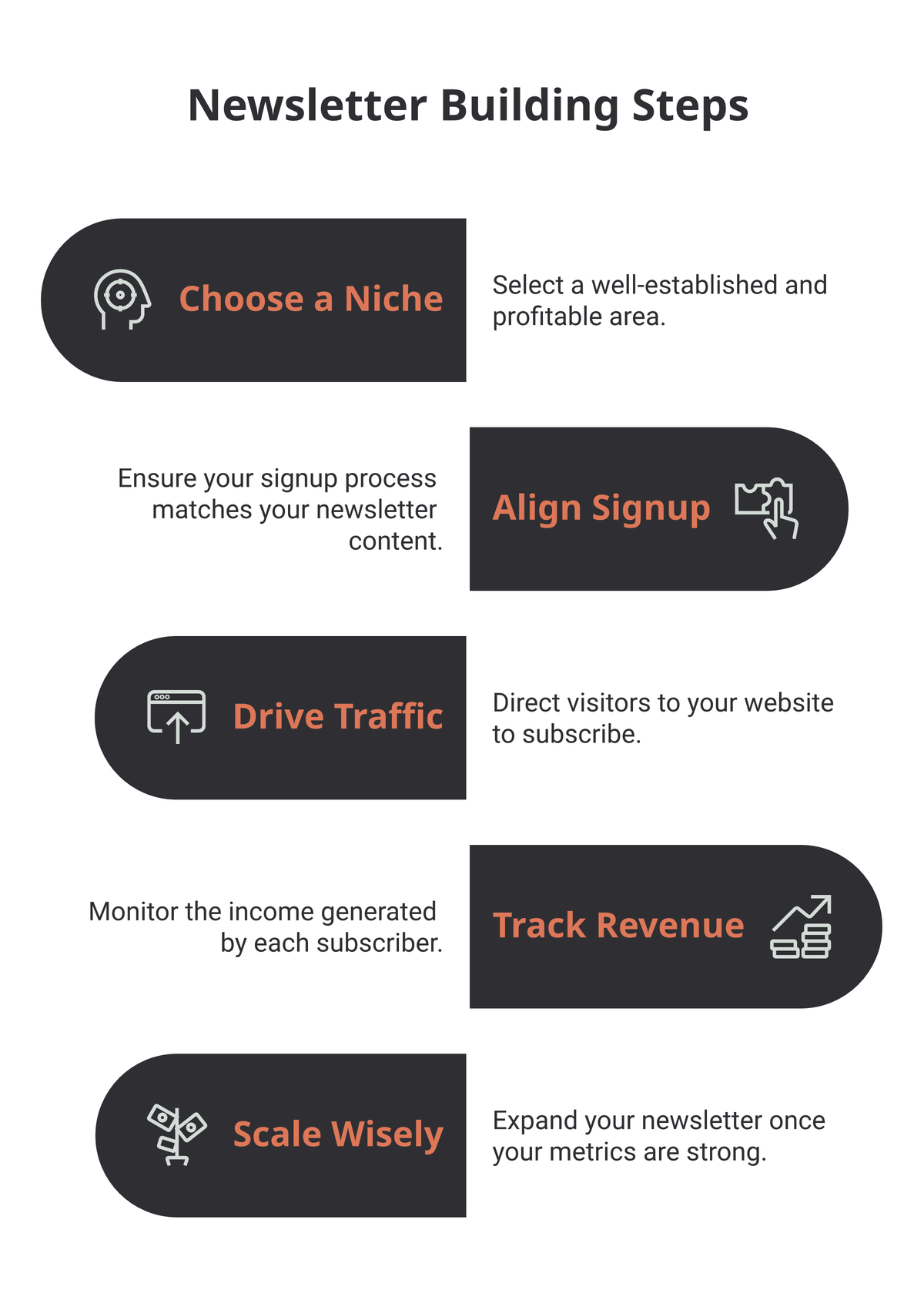
John focuses on his B2C lifestyle newsletter, which he uses as a vehicle to drive traffic back to his website for ad revenue. He discusses the challenges of optimizing the newsletter, including aligning the signup messaging with the content, testing different formats and content types, and tracking key metrics like total clicks and revenue per subscriber. He highlights the potential of in-email ads and sponsored ads, although they are currently less lucrative for B2C niches.
B2B and Local Newsletter Opportunities
John discusses the potential of B2B newsletters, which cater to specific industries or career paths, and local newsletters focused on a particular geographic region. He shares insights on monetization strategies, such as selling products, courses, and advertising for B2B newsletters, and the potential for high-value advertising in local newsletters.
Subscriber Acquisition and Scaling
John emphasizes the importance of acquiring subscribers at a sustainable cost and scaling the newsletter through paid ads or leveraging free traffic sources like blogs, social media, and direct traffic. He stresses the need to understand the revenue per subscriber and break-even point to determine the maximum cost per subscriber for paid ads.
Data-Driven Decision Making and Future Opportunities
John highlights the importance of using data to make informed decisions, such as testing different content types and monitoring metrics like click rates and revenue per subscriber. He discusses the potential of email connect URLs from ad networks like Mediavine, which can increase ad revenue by attaching subscriber emails to site visits. John also explores the possibility of leveraging a successful newsletter into ‘shoulder newsletters’ or sub-niches.
My Take: What This Means for Solo Publishers
John’s framework is solid — but let me translate it for the affiliate-focused solo publisher who isn’t running a team operation.
The macro picture first: email ROI currently sits at $36–$40 per dollar spent, and newsletter platforms have nearly doubled since 2024 with over 50,000 newsletters now on Beehiiv alone. This isn’t a contrarian bet anymore. It’s a mature channel that Google’s algorithm chaos is pushing publishers toward at scale.
Start with the B2C lifestyle model — it’s the lowest-risk entry. If you already have display ad traffic (Mediavine, AdSense), email plugs into a business model you’ve already proven. The Mediavine email connect URLs John mentions are the real mechanic here: attaching subscriber identity to site visits lifts RPM immediately without changing anything else. That’s not a minor optimization — it’s a meaningful revenue bump on traffic you’re already getting.
For affiliate publishers specifically: don’t frame the newsletter as a separate revenue channel at first. Frame it as a warm retargeting layer. SEO traffic is cold — they landed, maybe clicked, and left. Newsletter subscribers are warm — they opted in and expect you. That trust gap is where affiliate conversions happen. Use the newsletter to test offers before committing to full editorial coverage. Send a segment, track clicks, see what converts. Fastest feedback loop you have. For a broader look at diversifying beyond Google traffic, that playbook covers the layered approach in detail.
The paid acquisition trap: John says to know your revenue-per-subscriber before buying traffic. I’d add: don’t buy subscribers until you’ve proven organic conversion from your existing blog audience. If your own readers won’t sign up, paid traffic just scales a broken funnel. Get to 500–1,000 organic subscribers first. Once the numbers work, the PPC for affiliates framework applies directly to newsletter subscriber acquisition — same logic, different channel.
What to skip for now: B2B newsletters have better monetization but 10x harder audience acquisition — only relevant if you’re already in that space. The “shoulder newsletter” concept John mentions is a later-stage play; get one newsletter working before expanding. Don’t agonize over platforms either — Kit, Beehiiv, and Mailchimp all work fine. The platform choice matters far less than the content-to-subscriber alignment John covers. And remember: your email list is also a monetizable asset beyond ongoing revenue — factor that into the build vs. ignore calculus.
The bigger picture: this is what moving from organic-only to a multi-channel operation actually looks like in practice. You’re not abandoning SEO — you’re building a safety net that also earns. For another angle on owned-audience building, Doug Cunnington’s breakdown of podcasting as an audience channel covers the same logic applied to audio.
Action Items
- Choose a niche with ongoing interest and understand how the newsletter will make money before investing time and resources.
- Test different types of content, formats, and signup messaging to optimize the newsletter’s performance and align with the audience’s interests.
- Track key metrics like total clicks, revenue per subscriber, and break-even point to make data-driven decisions and determine the maximum cost per subscriber for paid ads.
- Leverage free traffic sources like blogs, social media, and direct traffic to acquire subscribers, and consider scaling with paid ads once the numbers are working.
- Explore opportunities for monetization through selling products, affiliate marketing, sponsored ads, or subscriptions based on the newsletter type and audience.
- Investigate the potential of email connect URLs from ad networks to increase ad revenue by attaching subscriber emails to site visits.
- Consider leveraging a successful newsletter into ‘shoulder newsletters’ or sub-niches for further growth and engagement.