Effective Affiliate Marketing Strategies to Earn More
Embarking on a successful journey in affiliate marketing involves a strategic approach. This guide, based on the experience of a successful affiliate marketer earning over $1 million, provides a step-by-step roadmap for achieving similar success. Choosing Profitable Niches The foundation of your aff

Embarking on a successful journey in affiliate marketing involves a strategic approach. This guide, based on the experience of a successful affiliate marketer earning over $1 million, provides a step-by-step roadmap for achieving similar success.
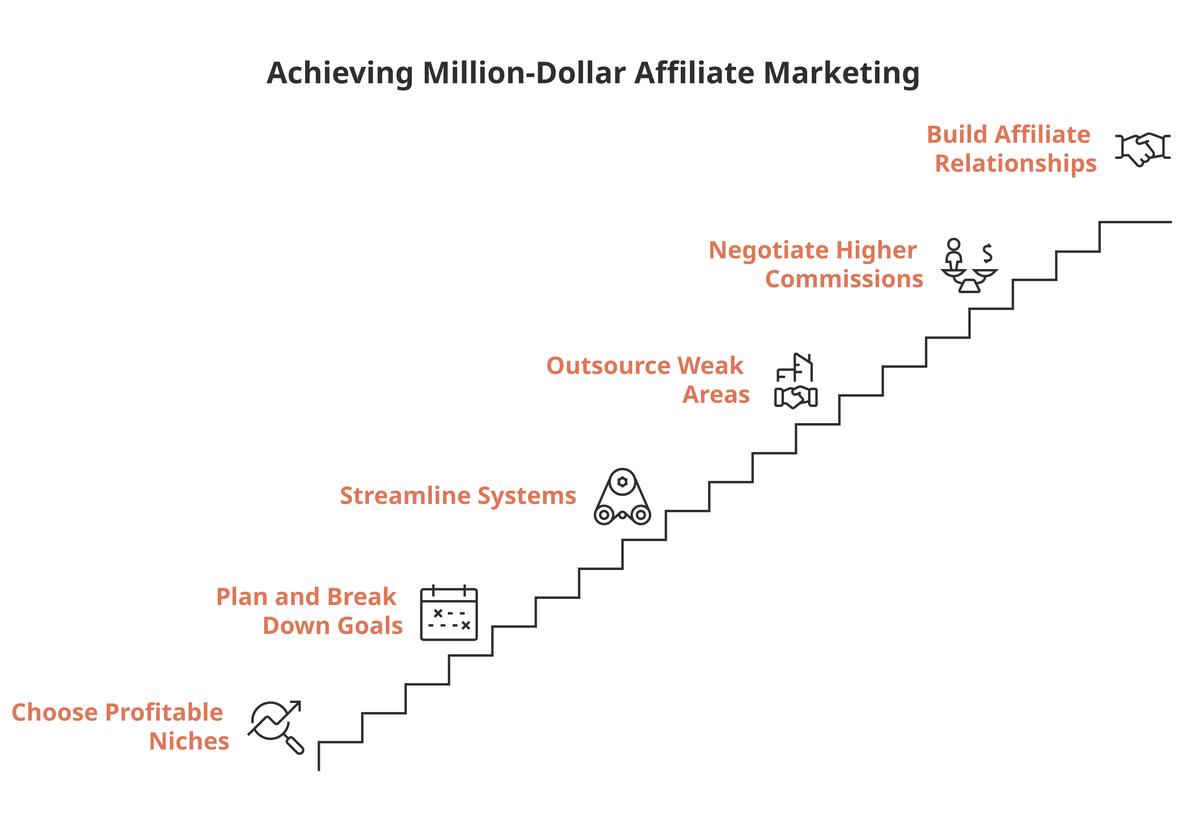
Choosing Profitable Niches
The foundation of your affiliate marketing strategy is choosing the right niches. To ensure profitability:
- Evaluate potential niches based on commission rates, affiliate manager access, and the ability to satisfy core human needs.
- Avoid niches with volatile markets or commonly returned products.
- Score each niche based on a balance of positives (like high commissions) and negatives (like competition).
- Select 2-3 stable niches for your affiliate sites.
- Create detailed content plans and keyword targets for each chosen niche.
Planning and Breaking Down Goals
Success in affiliate marketing also requires meticulous planning:
- Map out your high-level goals for the next quarter.
- Break these down into manageable monthly, weekly, and daily tasks to maintain focus on important objectives.
Streamlining Systems
- Limit exposure to volatile niches and focus on areas of personal interest to streamline your systems.
- This approach will enable passive income with minimal ongoing effort.
Outsourcing Weak Areas
- Regularly review your tasks to identify areas of weakness or tasks you tend to procrastinate on.
- Research and hire skilled contractors to manage these aspects, optimizing efficiency.
Negotiating Higher Commissions
- Always aim for 10% or higher commissions.
- Negotiate by pitching multiple vendors against each other.
- Leverage niche Amazon offerings in your negotiations.
- Set up calls with affiliate managers to start conversations about commission rates.
Building Affiliate Relationships
- Regularly check in with affiliate managers to strengthen relationships.
- Share relevant news and articles with them.
- Such relationships provide security as managers can alert you to issues and might favor your requests.
My Take: What This Means for Solo Publishers
The framework above is solid — but it was written for affiliate marketers running teams and scaling aggressively. If you’re a solo publisher running niche sites, the priorities shift a bit.
The biggest thing running sites across multiple niches has taught me: recurring commissions compound in ways one-time payouts never will. A $200 one-time commission sounds great until you do the math on a SaaS customer paying $150/month for 18 months at 30% recurring — that’s $810 from a single referral. Research from 2026 confirms this pattern is accelerating: affiliates who’ve shifted to “sticky” SaaS products (email tools, hosting, CRMs) that become part of users’ daily workflows are outperforming on lifetime value by a wide margin. Worth auditing your own program mix against this lens before negotiating anything.
On niches: two or three stable niches is right, but resist the urge to spread evenly. Double down on whichever niche gives you the best affiliate manager relationships. The commission negotiation advice only works if you’ve already built the relationship — cold negotiation almost never lands. For a practical breakdown of how to position for this in 2025/26, the SEO and affiliate positioning framework from Peter Macinkovic is worth your time.
The outsourcing section deserves more weight than it gets here. The real trap for solo publishers is doing low-leverage work yourself — formatting posts, chasing broken links, managing content calendars — instead of the high-leverage work only you can do: product selection, testing affiliate offers, running paid campaigns to validate new niches fast. That’s where most solo operators stall — not strategy, but time allocation.
Traffic diversification matters more than ever in 2026. Relying entirely on Google organic is the single biggest business risk in affiliate publishing right now. Exploring alternative traffic sources and building passive link acquisition into your workflow via data-study autopilot systems are the two highest-ROI moves available to a solo site operator. And thinking long-term: if you treat every site as a sellable asset from day one — not just a traffic and commission machine — it changes every decision you make. There’s a good framework for this in building and selling digital assets strategically.
The key takeaways for a successful affiliate marketing strategy are:
Summary
- Choose stable, profitable niches as your base and create focused content plans.
- Plan and break down your SEO/affiliate goals into manageable tasks.
- Outsource weaker areas to maintain efficiency.
- Always negotiate for higher commissions using various tactics like demonstrating industry knowledge and showing high conversion data.
- Build and maintain relationships with affiliate managers for long-term success.
Implementing these strategies will set you on a path to significant earnings while optimizing your work process. Stay dedicated, stay focused, and watch your affiliate business grow!
Related reading on RankingHacks: SEO Strategy for Affiliates | PPC for Affiliates | Building and Selling Digital Assets